Call us now: 613-276-6374

Your Attic Has Mold — But Your Roof Isn’t Leaking: Here’s Why
Discover why attic mold can develop even when your roof appears to be in perfect condition—and what Ontario homeowners should do about it.
10/4/20265 min read
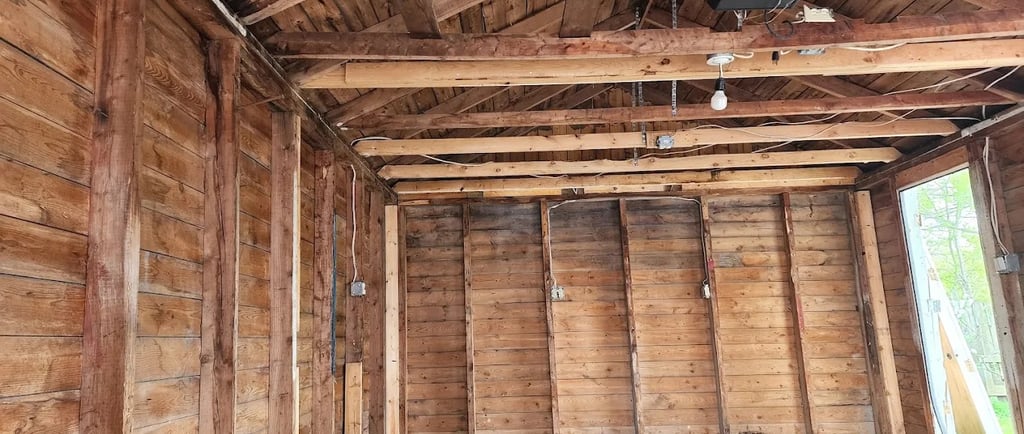
Your Attic Has Mold — But Your Roof Isn’t Leaking: Here’s Why
Discover why attic mold can develop even when your roof appears to be in perfect condition—and what Ontario homeowners should do about it.
Finding black or dark staining on the wood in your attic can be alarming. The first thought many homeowners have is usually the same:
“My roof must be leaking.”
But that isn't always the case.
Attic mold can develop even when there is no obvious roof leak. In many Ontario homes, the underlying problem is excess moisture, condensation, poor attic ventilation, or warm indoor air escaping into the attic.
Understanding the cause is critical because simply cleaning the visible mold without correcting the moisture problem can allow the mold to return.
Why Does Mold Grow in an Attic?
Mold requires moisture to grow. Your attic can become a perfect environment for mold when moisture accumulates and remains on surfaces such as roof sheathing, rafters, and insulation.
During Ontario's cold seasons, the temperature difference between your heated home and your cold attic can create condensation.
Warm air from inside your home naturally contains moisture. If that warm, moist air escapes through openings in your ceiling and reaches the cold underside of the roof, the moisture can condense on the roof sheathing.
Over time, repeated condensation can create the damp conditions that allow mold to develop.
This means you can have significant attic mold without a single drop of rainwater entering through your roof.
1. Bathroom Fans Venting Into the Attic
One of the most common moisture problems involves bathroom exhaust fans.
A bathroom fan is designed to remove warm, humid air from your home. That air needs to be exhausted outside the building.
If the duct terminates inside the attic instead, you're essentially releasing moisture directly into the space where you don't want it.
Every shower can introduce a significant amount of warm, humid air into the attic.
Over time, moisture can accumulate on cold roof sheathing and insulation.
A bathroom fan that vents into the attic can therefore contribute to condensation and mold growth.
If you discover attic mold near a bathroom fan or its ductwork, the ventilation system should be investigated as part of the remediation process.
2. Poor Attic Ventilation
Your attic needs proper airflow.
A properly functioning attic ventilation system helps manage heat and moisture and can reduce condensation problems.
Problems can occur when:
Soffit vents are blocked
Attic vents are insufficient
Insulation blocks ventilation channels
Roof vents are improperly installed
Ventilation pathways are interrupted
Exhaust fans terminate inside the attic
Poor ventilation doesn't necessarily cause mold by itself, but it can contribute to the moisture conditions that allow mold to grow.
3. Warm Air Escaping From the House
Another potential source is air leakage between your living space and attic.
Warm indoor air can escape through gaps around:
Attic hatches
Pot lights
Plumbing penetrations
Electrical fixtures
Ductwork
Chimneys
Ceiling penetrations
Wiring openings
During winter, that warm air enters the colder attic environment.
When moisture-laden air meets cold roof surfaces, condensation can occur.
Repeated condensation can eventually create an environment suitable for mold growth.
4. Attic Insulation Problems
Insulation doesn't simply need to be present—it needs to be installed properly.
Problems can occur when insulation is:
Wet
Compressed
Displaced
Contaminated
Blocking soffit ventilation
Installed around improperly sealed penetrations
If insulation has been exposed to significant moisture or mold contamination, simply covering it with new insulation may not solve the underlying problem.
The source of the moisture needs to be identified first.
5. Roof Leaks Can Still Be the Problem
Although attic mold doesn't automatically mean you have a roof leak, roof leaks should never be ruled out without investigation.
Possible sources include:
Damaged shingles
Failed flashing
Roof penetrations
Ice damming
Damaged vents
Deteriorated roofing materials
Improperly sealed areas
The key is determining where the moisture is coming from.
A professional assessment should distinguish between water intrusion and condensation-related moisture.
How Can You Tell If Attic Mold Is From a Roof Leak or Condensation?
There isn't always a simple visual answer.
However, the location and pattern of moisture damage can provide useful clues.
Signs that may indicate condensation
Widespread dark staining on roof sheathing
Mold appearing across large areas
Heavy staining during or after winter
Frost or moisture on the underside of the roof
Mold concentrated around ventilation problems
Moisture near bathroom exhaust ducting
Signs that may indicate a roof leak
Localized water staining
Moisture concentrated around a roof penetration
Water damage below a specific roof area
Damaged or deteriorated roofing materials
Staining that becomes worse following rainfall
These are only indicators, not a definitive diagnosis.
A proper investigation should identify the actual moisture source before deciding how the mold should be remediated.
Is Black Mold in an Attic Dangerous?
Not every dark stain found on attic wood is necessarily the same type of mold.
The appearance of mold alone cannot reliably determine its species or health risk.
However, visible mold growth indicates that a moisture problem exists and deserves attention.
Mold can also spread beyond the area where it was first noticed. If contaminated materials are disturbed improperly, mold spores can become airborne and spread to other areas.
That is why attic mold should not simply be treated as a cosmetic problem.
The objective isn't just to make the wood look clean. The objective is to address the moisture source, remove or remediate contamination appropriately, and prevent recurrence.
Should You Remove Attic Insulation?
Not necessarily.
Whether insulation should be removed depends on its condition, the type of insulation, the extent of contamination, moisture exposure, and the remediation plan.
In some situations, affected insulation may need to be removed.
In others, it may be possible to remediate the affected area without removing all of the insulation.
A professional assessment can help determine the appropriate approach rather than automatically replacing everything.
Can You Clean Attic Mold Yourself?
Minor surface contamination may appear simple to clean, but attic mold remediation can become more complicated when contamination is extensive or the moisture source has not been corrected.
One of the biggest mistakes homeowners can make is treating only the visible mold.
For example:
Mold is cleaned → moisture problem remains → condensation continues → mold returns.
That's why professional remediation should focus on both the contamination and the conditions that allowed it to develop.
Homeowners should also avoid disturbing extensive mold contamination without understanding the appropriate containment, personal protective equipment, cleaning methods, and waste-handling requirements.
What Does Professional Attic Mold Remediation Involve?
Every attic is different, so the exact remediation process depends on the circumstances.
A professional assessment may involve:
1. Identifying the moisture source
The first question should be:
Why is there moisture in the attic?
This may involve examining ventilation, roof conditions, exhaust ducts, insulation, air leakage and other potential sources.
2. Assessing the extent of contamination
Visible mold may only represent part of the affected area.
The attic should be evaluated to determine how extensive the contamination is and which materials are affected.
3. Developing a remediation plan
The appropriate approach depends on the extent of mold growth and the materials involved.
4. Remediating affected areas
Depending on the situation, remediation may involve cleaning, treatment, removal of contaminated materials, or a combination of methods.
5. Addressing the moisture problem
This is one of the most important steps.
If the source of moisture isn't corrected, mold can return.
6. Preventing recurrence
Ventilation, air sealing, exhaust ducting, insulation and other contributing factors may need to be addressed.
Don't Just Clean the Mold—Find Out Why It Is There
If you discover mold in your attic, the most important question isn't simply:
“How do I remove it?”
A better question is:
“Why did it grow here in the first place?”
A roof that isn't leaking doesn't necessarily mean your attic is free from moisture problems.
Condensation, inadequate ventilation, bathroom exhaust, air leakage, insulation problems and other moisture sources can create conditions where mold thrives.
Cleaning the visible mold without addressing the underlying cause can result in recurring problems.
Found Mold in Your Attic?
If you've discovered black or suspicious staining in your attic, don't automatically assume that you need a new roof—or that spraying the area with a household cleaner will solve the problem.
The first step is understanding the source and extent of the moisture and mold.
H&W Contracting Abatement provides professional mold remediation services for Ontario homeowners and property owners.
If you suspect attic mold, contact H&W Contracting Abatement to discuss your situation and determine whether a professional assessment is appropriate.
Don't wait for attic mold to become a bigger problem. Find the moisture source, address the contamination, and protect your home.